聊天讨论 A Robot Voice is a Performance, Not a Preset: Why the Harshest Setting Is Rarely the Right One

The default is the loudest robot in the list
Open a robot voice generator and the path of least resistance is the same almost everywhere. Pick the harshest effect on offer, slide the strength to its maximum, listen for two seconds, download. The sound is instantly recognisable and, for that same reason, instantly forgettable. It turns up in science fiction parodies, stream alerts and game placeholders, and in each place it sounds like the same placeholder: a machine announcing its own machinery rather than a character saying a line.
The habit is partly a product of how these tools are sold. Ranking pages and sample galleries compete on novelty, offering a fresh set of filters and a free trial rather than any help with a decision about fit. Six effects and a strength slider look like a menu of flavours, so the loudest one reads as the most impressive one. A word of warning on the vocabulary: robot voice generator, robot voice and robot voice changer are often used as if they name one sound, when in practice each names a family of choices.
My position is simple. A robot voice is a performance. The effect has to be chosen for the role the voice plays in the scene, not for how futuristic it sounds in isolation. A board of robot game pieces seen from above makes the point: identical pieces, identical value, and the game is decided entirely by where each one is placed. The voice is the same. The same metallic ring can be a narrator, a threat or a joke, and which one it becomes depends on the setting you chose and the reading underneath it.
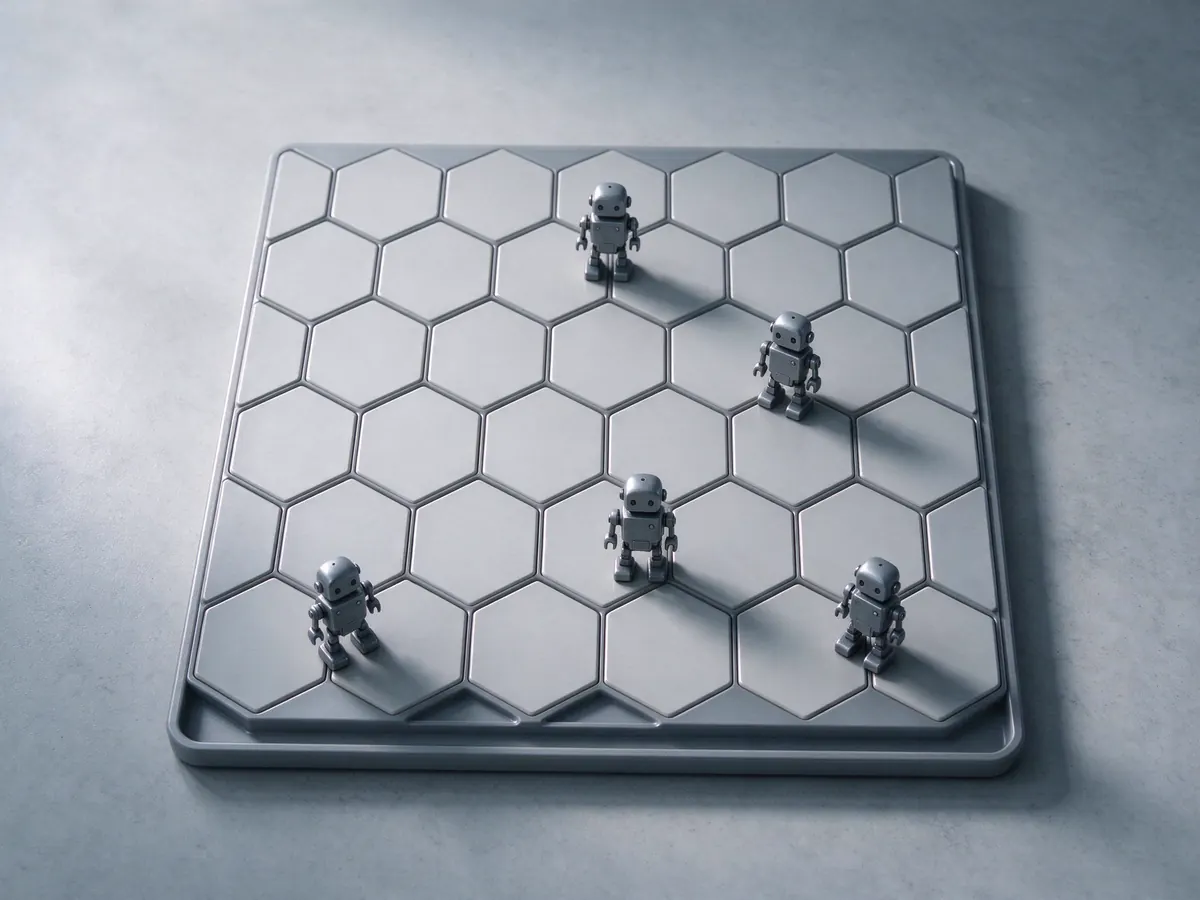
Interchangeable robot pieces on one board: the same setting used for every scene
A robot voice is a character choice
Listeners are generous with worn effects and unforgiving about wrong ones. A murderous AI delivering its warning in a calm ship's-computer tone will land harder than the same warning screamed through distortion, because the calm is the menace. A friendly home assistant pushed into a glitch reads as broken, not as playful. The effect is doing work either way, and the question is whether the work is the one the scene needs.
So decide the character before touching a slider. Is this robot a narrator, an authority, a malfunction, a mascot or a background hum? Each answer implies a different amount of processing. A narrator can carry a light ring and stay intelligible for a whole chapter. An authority, the ship's computer that will not be argued with, wants steadiness more than spectacle. A malfunction is the one case where instability is the point, and there the effect can go far. A mascot needs warmth and a little human timing. A background hum barely needs words at all.
Then choose the smallest effect that carries that character. This is the part that feels counterintuitive, because the strongest setting is the easiest to hear working. But voice and effect are one decision, not two. A warm, steady reading with a light metallic ring usually beats a flat reading pushed to full distortion, since the ring lands against a performance rather than replacing one.
The strength dial is the script
Heavy processing is the right answer for a joke, a jump scare or a retro game sting that lasts two seconds. Nobody needs to parse the words in a two-second alert; they need to feel it. Short bursts forgive everything, including settings that would be unlistenable at length.
Anything that has to be understood for minutes needs headroom. Dialogue in a game, a narrated guide, a podcast intro, a training video: these are listened to, not just heard, and metallic detail competes with consonants. A setting that reads fine in a three-word sample can become tiring over a full paragraph, and the fatigue arrives before the listener can name what is wrong.
The only reliable test is to adjust while it plays and compare. Sameness is the enemy here, because a robot effect is a continuous sound and its cost accumulates. Keep the pauses and delivery tags in the script, and process the reading so the timing of the character survives the effect. A robot that never pauses is not more robotic than a human, only less legible.
Guidance and delivery need different settings
A smart-home assistant or an in-app guide is a case where clarity outranks atmosphere. The listener is mid-task, the instruction matters, and the voice should be mild, consistent and never in the way. A quiet kitchen at dawn, kettle steaming, is the right image: the room should stay calm while the voice does its small job and steps back. Light metallic colouring is enough to signal machine, and anything more starts competing with the sentence.
Retro and science fiction projects can go much further, because the listener came for the atmosphere and knows the sound is part of the fiction. The effect is part of the genre contract there, not an obstacle to comprehension. The mistake in those projects is under-committing, not over-committing.
Between those poles, the practical advantage is that a single run is cheap enough to test two or three settings against the same script rather than guess once and hope. This is where a studio such as Audio AI Studio earns its place: the effect, the voice read and the finished audio sit in one browser session, so a creator can run the same paragraph through several passes and download the take that fits. For anyone who needs a robot voice generator that holds text, voice choice, effect and export in the same place, that continuity saves the most tedious part of the work, which is reproducing the identical script across separate tools.
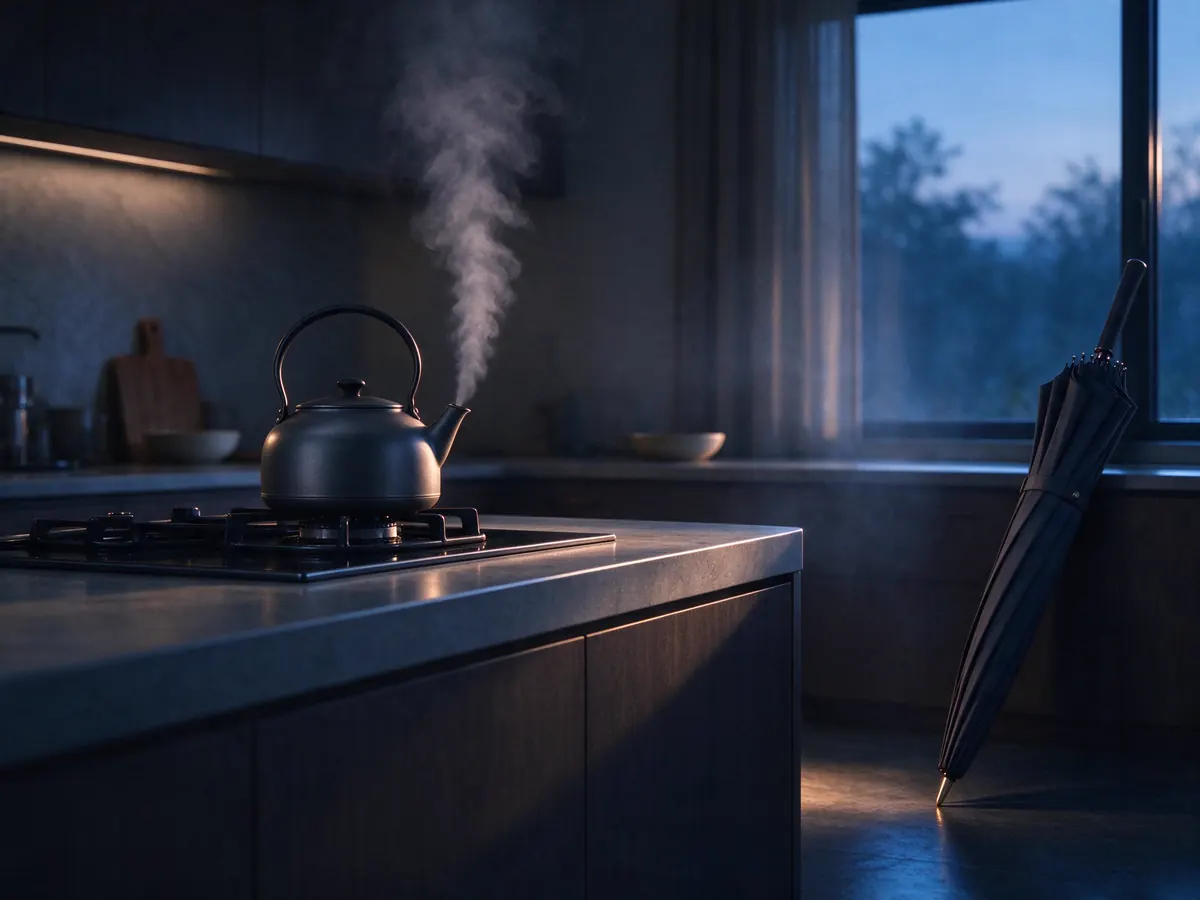
The quiet, everyday setting where a robot voice has to stay out of the way
The objection: the audience wants the cliché
A fair objection, and one I have heard often: retro game fans, stream audiences and science fiction parodies want the sound they already recognise. Deliberately avoiding it is its own kind of bad taste, since the audience came for the reference.
But recognisable and careless are not the same thing. The line can be the cliché while the delivery, pitch and strength still fit the scene. A parody robot that hesitates, pauses in the wrong place or lands its punchline flat is funnier than one that simply sounds distorted, because the joke needs a straight face to play against. The cardboard robot head left on a playroom table after the game is over carries the point: the costume is familiar to everyone, and what made it work was the child inside it committing to the part.
Even in parody, an effect chosen on purpose reads as a choice and lands. One left on default reads as a shortcut, and audiences are quick to sense the difference even when they cannot explain it. The cliché is the genre. The setting is still yours to make.
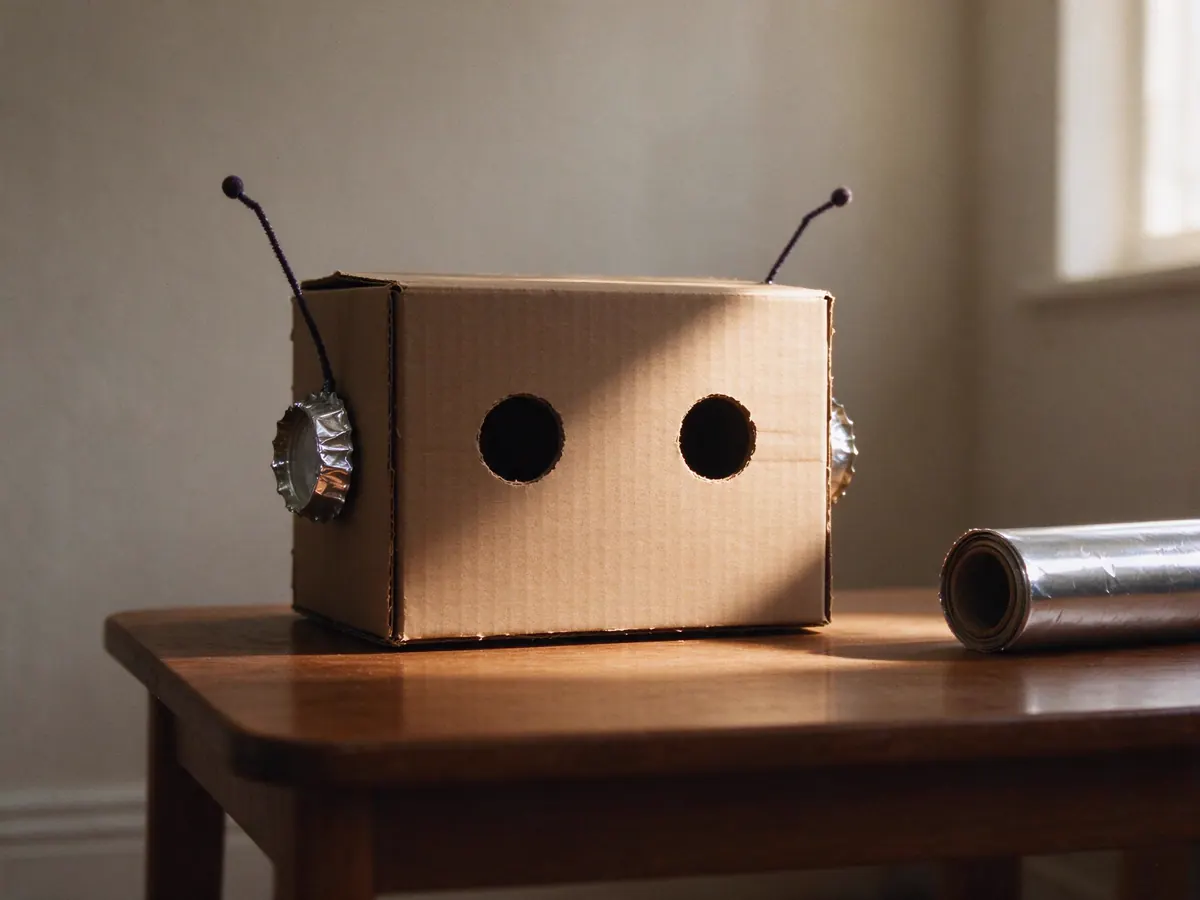
A homemade robot head: the familiar shape, made on purpose rather than left on default
How to test a robot voice before you commit
The method is short enough to use on the next project.
Pick the character in one sentence before touching any slider. If the sentence will not form, the scene is not yet clear and no effect will fix it.
Read the actual script, not a sample line. The same paragraph you will ship, with its pauses, is the only honest test.
Start lighter than instinct suggests, then add until the character reads clearly. Arriving at the right setting from below is easier than retreating from distortion.
Check the result on earbuds and on a phone speaker. Small speakers flatten metallic detail, and many listeners will hear the robot on the worst speaker in the room.
Keep the loose take as well as the clean one. The difference between takes is often the performance you want, and a slightly imperfect read with the right timing ages better than a flawless one with none.
None of this makes the loudest robot wrong. It makes it a choice rather than a reflex. A robot voice is a character performance, and like any performance it is judged by whether it fits the scene, which is a question no preset can answer for you.